Comparison of Virtual Reality Head Mounted Displays

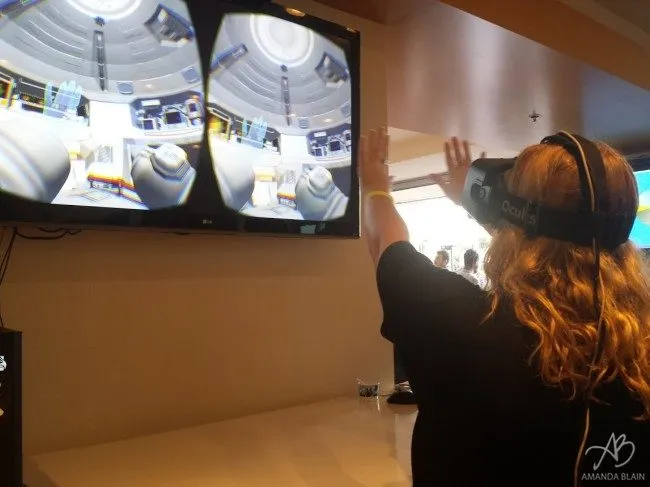
Because of the various technology events I get to attend, I have been using various forms of the “new” Virtual Reality Head Mounted Displays (HMDs) for quite awhile now. So you too can stay on top of this emerging trend, I figured that perhaps it was time to share with you what I’ve learned and what is going on in the marketplace with these hardware products. This article morphed into something rather lengthy, so I have included a nice little TLDR for each section for the skimmers out there.
Basic Parts of Virtual Reality Head Mounted Displays
TLDR: Audio, Display and Computer Technology have finally reached a level where Virtual Reality is possible. There are many parts that make up a typical VR HMD including display, sound, and tracking.
Virtual Reality that is making the news today, takes much of what has been learned from the past often times ‘failed’ hardware experiences. The technology in visual, audio and computer processing power are finally at a point where they can bring “true” personal Virtual Reality experiences to users via Head Mounted Displays. A Virtual Reality Head Mounted Display (VR HMD) is a device that sits on top of your head that can display images and sounds, to transport you to a “virtual world”. A good portion of these HMDs are not yet available for at home consumers. The HMD will typically be attached to a computer via a cable or a mobile phone will be placed inside of it, that then in most circumstances, displays two slightly different images on a screen in front of the viewer’s eyes. If you close one of your eyes and look at items in a room, each eye image moves a little to one side based on the perspective each eye receives.

Who are the Largest Head Mounted Display Manufacturers?
There are 6 main hardware players creating Head Mounted Displays in the Virtual Reality space right now.
Lets have a look at each one of these products to see their differences.
Oculus Rift

TLDR: Oculus is the big one with backing from Facebook. It offers high end display and sophisticated sound. A powerful computer is required and it is for stationary use only.
Oculus Rift Founded and History
Started in 2012 by Palmer Luckey and Brendan Iribe, they ran a successful Kickstarter campaign earning roughly $10 Million dollars. Oculus is the name many think of when thinking of VR headsets today. This is in part due to Facebook purchasing them in 2012 for a cool $2 Billion in cash and Facebook stock options. The Oculus Rift has already released 2 pre release developer versions – “Development Kit 1” and the “Development Kit 2” for those interested in developing for the platform. Oculus was chosen as the name because its the Latin word for “eye”.

What is Included with Oculus Rift
The Oculus Rift headset, sensor, remote, cables, Xbox One controller, and Lucky’s Tale – a game.
What is Required To Run Oculus Rift
The Oculus Rift is required to be attached to a computer with the minimum requirements:
GPU: NVIDIA GeForce® GTX 970 / AMD Radeon™ R9 290 equivalent or greater
CPU: Intel® i5-4590 / AMD FX 8350 equivalent or greater
RAM: 8GB+
Video Output: HDMI 1.3 or newer
USB Port: 3x USB 3.0 plus 1x USB 2.0 Port
Operating System: Windows 7 SP1 64 bit or newer
The computer needed to run Oculus Rift is typically a high end gaming PC that the average home user may not currently have.
Technical Specs Of Oculus Rift – Visual / Sound
The Oculus Rift has a OLED display, which offers 1080 x 1200-pixel resolution for each eye and 90 Hertz Refresh rate. The headset weighs roughly 1.04 lbs.
The Oculus Rift features an integrated VR audio system, but the audio arms are removable so you can use your own headphones too. The Oculus Rift Audio SDK uses Head-Related Transfer Function (HRTF). This technology is basically how sound waves bounce off the body and the slight delay between ears that help you place where sound is coming from. The audio is spatialised and encoded in 360-degree surround sound to precisely match the video.
The Oculus Rift uses 360 degree positional head tracking to figure out where you are and what you are looking at. The Oculus Rift is mostly to be used sitting down or occasionally standing
Oculus Rift Controller

The Oculus Rift currently ships with an Xbox One controller. This will be replaced later on with the Oculus Touch. Although the Oculus Touch will include a joystick and other options, they are designed to use the same tracking as the headset. These controllers were designed to feel like “real hands”. It also ships with an Oculus remote that allows you to navigate, select, and access volume controls at your fingertips.
What makes Oculus Rift Special?
Oculus includes a small cylinder device that is placed in front of you to help track your movements. A series of infrared LEDs embedded in the headset and Touch controller are then monitored by this wireless sensor in what Oculus calls the Constellation Tracking System. This is basically how Nintendo’s Wii Remotes work, when you point the remote at the sensor bar that sends infrared signals, the position of the Wii Remote can be triangulated. The constellation tracking system is designed to track if you are sitting down or standing up.
Launch Date For Oculus Rift Regular Users and Oculus Rift Cost
On March 28, 2016, the Oculus Rift was released. Purchased today, you could expect to see your shipment in July of 2016 according to the current website. The Cost is $599 on the Oculus VR website.
HTC Vive

TLDR: HTC Vive includes many sensors that use infrared scanning for tracking your movements as you virtually walk around a small play area. A fancy computer is required.
HTC Vive Founded and History
The HTC Vive is currently in production with a partnership between HTC (the Chinese Hardware phone manufactures) and Valve (the Video game guys who made Half Life, Left 4 dead and most importantly, Steam). The companies are working with Google, Lions Gate, and HBO to develop content for the device.
What is Included with HTC Vive
Expected to be included in the box is the Vive headset, Two wireless controllers, Two Lighthouse base stations, Link box, Earbuds, Vive accessories, safety guide and warranty card, Games – Job Simulator, Fantastic Contraption and Tilt Brush by Google
What is Required To Run HTC Vive
The HTC Vive is required to be attached to a computer with the minimum requirements :
GPU: NVIDIA GeForce® GTX 970 / AMD Radeon™ R9 290 equivalent or greater
CPU: Intel® i5-4590 / AMD FX 8350 equivalent or greater
RAM: 4GB+
Video Output: HDMI 1.4 or DisplayPort 1.2 or newer
USB Port: 1x USB 2.0 or greater port
Operating System: Windows 7 SP1 or newer
Much like the Oculus Rift, the computer needed to run the HTC Vive is typically a high end gaming PC that the average home user may not currently have.
HTC Vive Controller

The Vive controllers are similar to modified steam controllers, sort of cut in half. They are wireless and battery powered for up to 4 hours of use. They are touch sensitive and include a trigger button under each forefinger, a home button and a circular touchpad on top. The grip can detect when you squeeze it. There is Haptic feedback, so slight shakes when you connect with items available also. Each controller includes 32 sensors on the circular top part to help track your movements accurately.
The controllers appear on screen where the controllers are as hands, tools or other items the developers code in. But it is nice to see them as part of the experience.
Technical Specs of the HTC Vive- Visual / Sound
The HTC Vive has a OLED display, which offers 1080 x 1200-pixel resolution for each eye and 90 Hertz Refresh rate. 110 degree field of view. The headset weighs roughly 1.2 lbs.
3D directional sound is supported. A headset is used via a headset jack. Not much information has been currently released on the sound aspect of the HTC Vive.
What makes HTC Vive Special?

The HTC Vive is meant for moving around in. It has 32 visible sensors on the front of the device that allow for precise laser motion tracking. These sensors as well as many others, including a gyroscope and accelerometer in the HTC Vive allow for a better experience with tracking your head turning movements and as you move around the room. Laser positioning and two small Steam VR Laser Tracking base stations are designed to be used with the device to help the user “play” in an area that is 5 x 6.5 feet. These two base stations sync via wireless and only require a power cable. Mirrors, windows and furniture should be removed to have the best experience. The device can be used standing, sitting down or in the small play area.
The Vive also includes “Chaperone Mode” which is brought about by the front facing camera on the device. With the touch of the button, will allow users to see real world objects in an infra-red type view – kind of like how you would expect Batman to view criminals in the dark. If you get close to a wall or object these items will appear in VR and allow you to hopefully not smash your wall or priceless vase.
Launch Date For HTC Vive Regular Users and HTC Vive Cost
The HTC Vive is already available for preorder and will start shipping in May 2016. The HTC Vive costs of $799.00 on the HTC Vive Website.
Playstation VR

TLDR: Playstation VR runs off a PS4. It’s less expensive than others on the marketplace and offers high end sound and display features.
Playstation VR Founded and History
Sony first announce its bid into VR with Project Morpheus in 2014. The name was officially changed to Playstation VR in September 2015. Anton Mikhailov a technical lead said Sony had been working on VR since the launch of Playstation Move in 2009.
What is Included with Playstation VR

Expected in the box is a Playstation VR headset; processor unit; Stereo headphones, Cables: VR headset connection cable; HDMI cable; USB cable; AC power cord; AC adaptor, PlayStation VR Demo and VR World Game Disc, PlayStation Camera, 2 PlayStation Move motion controllers
What is Required To Run Playstation VR
No computer required on this one, just a Playstation 4 connected to a small Processor Unit (PU) and then connected via HDMI and USB. This will likely allow more users who already own a Playstation 4 to access the VR market. The VR is handled by the PS4’s AMD graphics processor not the headset.
Playstation VR Controllers
Playstation VR uses two Playstation move controllers for some of its interactivity. It also can use the Sony Playstation Controller.
Technical Specs of Playstation VR – Visual / Sound
The Playstation VR has an OLED display, which offers 960 x 1080 – pixel resolution for each eye and 120 Hertz Refresh rate. 100 degree field of view. The headset weighs roughly 1.3 lbs.
Sony has its own proprietary 3D spatial sound engine as they dealt with quite a bit of their own sound already.
What makes Playstation VR Special?

Because of the “top over” design of the unit, a good amount of the weight is placed on the top of the head. This is to help with fatigue and weight distribution.
No high end computer required, just a Playstation 4. The Headset has 9 LED sensors on the headset that the Playstation Camera tracks to help with movement in the room.
Launch Date For Playstation VR Regular Users
Pre-order is already happening. October 2016 ship date. $499 on the Playstation VR Website.
Google Cardboard

TLDR: Google Cardboard is cheap/free and offers an entry to everyone into the VR space. Runs off your Smartphone.
Google Cardboard Founded and History
Google Cardboard is a low cost alternative to the high end VR headset in the marketplace. It was created by two Google engineers – David Coz and Damien Henry to help encourage adaptation and development in VR applications and launched in 2014.
What is Included with Google Cardboard
A cardboard headset, there are various versions that include straps, magnets and different options for interacting with the display.
What is Required To Run Google Cardboard

A smart phone that is less than 6 inches.
Technical Specs of Google Cardboard – Visual / Sound
The device, made from cardboard and other inexpensive components allows users to place their smart phone into the front of the viewer and have a VR experience. Headphones are attached to the smart phone device, adding into the sound experience. The screen is then split into 2 display images, one for each eye. The result is similar to the viewfinder days past, a 3D image and a wide field of view. There is no room positional tracking with Google Cardboard – only head tilt information.
What makes Google Cardboard Special?
No computer is required to run this. The template available online allows all users to experience VR using a device they likely already have in their home.
Launch Date For Google Cardboard Regular Users
Already available in the marketplace starting at $15 on the Google Cardboard Website or for free from templates online. Over 5 million Google Cardboard devices have been shipped.
Samsung Gear VR

TLDR: Samung VR is similar but many steps above Google Cardboard, includes some Oculus features and is still inexpensive. It runs off flagship Samsung phones.
Samsung Gear VR Founded and History
The Samsung Gear VR is a mobile virtual reality headset developed by Samsung Electronics, in collaboration with Oculus, and manufactured by Samsung. The headset was released on November 2015. Oculus and Samsung work together to have this as an alternative option to their more expensive Oculus Rift headset.
What is Included with Samsung Gear VR
Included in the box is a Samsung Gear VR for Select Samsung Cell Phones, Back band, top band, and window cover.
What is Required To Run Samsung Gear VR
You must use one of the latest Samsung flagship phones with the device:
- Galaxy S7, Galaxy S7 edge, Galaxy Note5, S6 edge+, S6 and S6 edge
Other types of phones may work with the device but will not work correctly with Oculus SDK that is specifically made for the Samsung Gear VR and is not recommended.

The Samsung Gear Vr has a touchpad and a back button on the side. These controls allow for a basic movement and interaction with games that Google Cardboard can not. There is also the option to purchase a SteelSeries Stratus XL controller separately that looks similar to the Xbox One Controller for added functionality.
Technical Specs of Samsung Gear VR- Visual / Sound
The technical specs will vary depending on which Samsung phone you use.
The S6 Edge has an AMOLED display, which offers 1080 x 1200-pixel resolution for each eye and 60 Hertz Refresh rate. 96 degree field of view. The headset weighs roughly 0.7 lbs without the phone attached.
It includes an accelerometer and gyroscope so it knows when you are moving and tilting your head. Everything that happens below your head is controlled by a controller.
You are able to leave your phone on speaker and allow those in the room around you to hear what is going on, but headphone use is available and should be used for the best sound experience.
What makes Samsung Gear VR Special?
The Samsung Gear VR doesn’t require high end computer systems. Because of the partnership with Oculus, the Samsung Gear VR optimizes the Samsung device at the Operating System level for optimized performance making VR related tasks first when in use. There are also more advance tracking sensors built into the headset that work seamless with the phones senses for a better tracking experience. It is also a completely wireless experience because everything is contained in the headset (besides headphones). The phone powers both itself and the Samsung Gear VR. They recommend turning off all extra features like WiFi, GPS, live wallpapers and any additional features keep it lasting longer. Like Google Cardboard, there is no room positioning abilities in Samsung Gear VR, only head tilt information.
Launch Date For Regular Users and Cost
Samsung Gear VR is currently available for $99 on the Samsung Gear VR website.
Open Source Virtual Reality (OSVR)

TLDR: OSVR is the “open source create your own” version headset that allows ongoing customization and upgrading the VR headset as needed.
Also worth mentioning is Open Source Virtual Reality(OSVR). OSVR is pushing the open source community by partnering with many different companies and manufactures to create “access for all” to VR. You can purchase various pieces to customize your own VR headset depending on which pieces interest you, or even create your own if you have access to a 3D printer and Ebay. A neat part of this in that the parts are swapable, and upgradable meaning you will not be left with a legacy device as the industry advances and grows. Complete kits run from $299 and up currently. Some big partners are supporting the OSVR movement, including Intel, Magic Leap, Ubisoft and several others.
There are many other hardware manufactures in VR, but most are variations of the ones shown here. These are the big ones in the next bit. Hopefully now you are a little bit more educated on the different Virtual Reality Head Mounted Displays in the marketplace and how they are different from each other. There will be much more coming on Virtual Reality.. So stay tuned!
Recent Posts
How To Cast Oculus Quest 2 VR to TV, Computer, Phone and Mixed Reality
If you want to show your friends what you are playing in VR, follow this…
How to Install Virtual Desktop on Oculus Quest 2 and Play SteamVR Wirelessly
So you bought a Quest 2 and want to wireless connect to your PC, play…
Is VR Safe For Kids? Can Kids Use the Meta Quest 2 VR?
Your children have requested a Meta Quest 2 VR headset because all their friends are…
Must Have Popular VR Oculus Quest 2 Games
What are the must-have VR Oculus Quest 2 Games? Much like all video games, there…
Should You Buy The Oculus Quest 2? Is VR ready?
Its finally here! Facebook has released the quest 2, but should you get it? Which…
What is 5G and Is it Harmful to Our Health?
What is 5G Wireless Technology? 5G (Fifth Generation of Wireless Technology) is actually really cool,…